Showing posts with label Vasundhara Dash. Show all posts

Wednesday, January 18, 2012

Third Coordination Workshop, Jan 9-13, 2012, Gurgaon


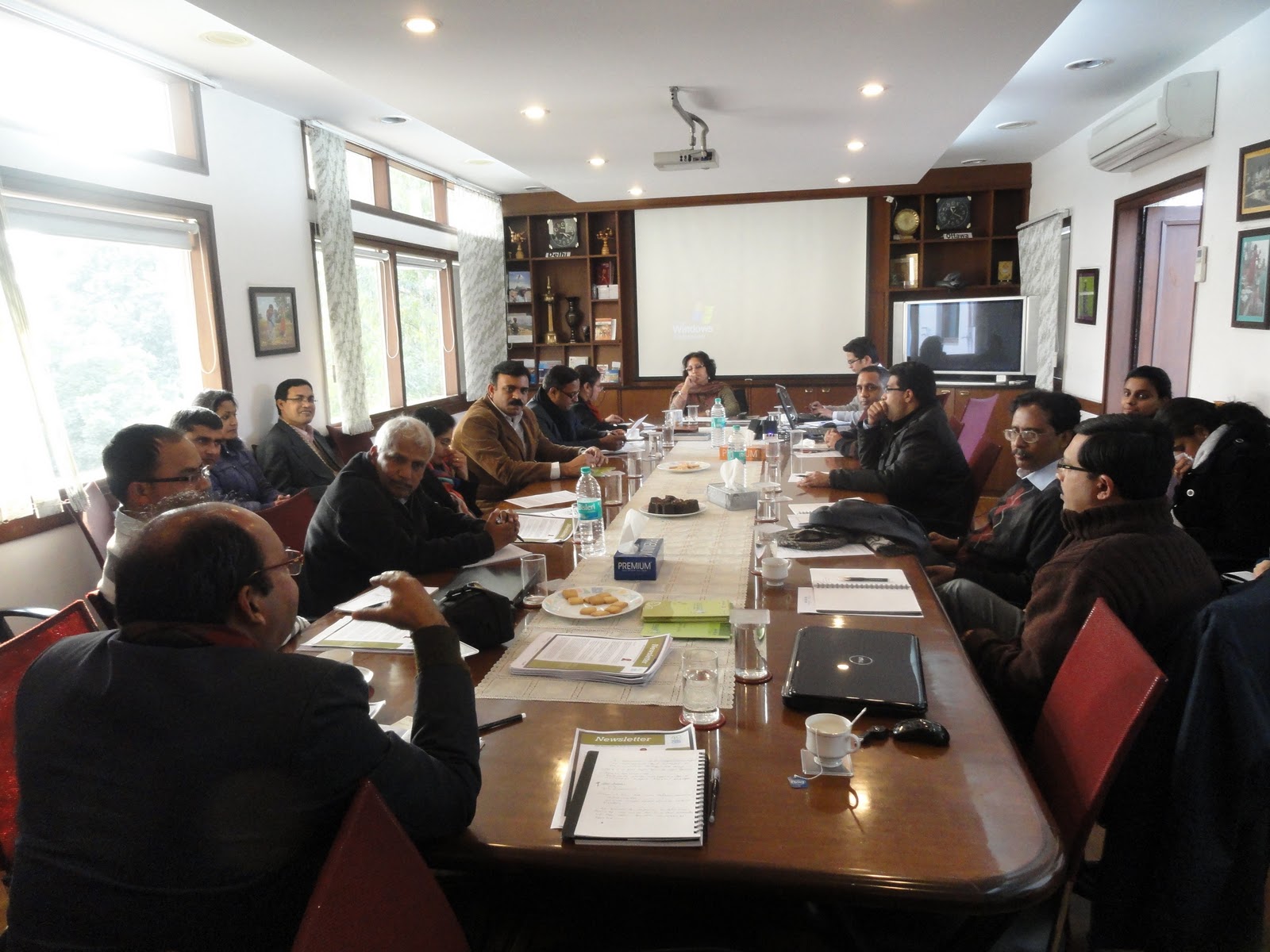
Peri-urban Project team members at the 3rd Coordination
Workshop, held at Gurgaon from 9-13 Jan, 2012
The third Coordination Workshop of the Water Security in Peri-urban South Asia Project was conducted from January 9–13, 2012 in Gurgaon, Haryana. The main objective of the workshop was to reflect on the progress made by teams from the 4 research locations and develop a shared understanding on the methodological tools and action work to be adopted in order to meet the objectives of the project.

Day 1 of the workshop was chaired by Dr Vishal Narain and the first session was based on presenting preliminary results and analyses by each team. Methodological challenges in the research and especially those related to the questionnaire survey were discussed next. Dr Anjal Prakash then took the session on Vulnerability and Capacities Index followed by a group exercise wherein each team listed possible indicators of vulnerability in the specific contexts of their research sites.

Day 2 of the Workshop largely focussed upon linking research with the overall objectives of the Project and towards developing a basic understanding of the cost-benefit analysis. Dr Vishal Narain did a stock taking on how the team has been able to contribute to a better understanding of the 'Peri-urban water security' especially since the Project is half-way through. He coherently reconnected the larger goals of the Project with the work that had been carried out so far and reflected on the conceptual evolution since the Project began. He pointed out how methodological pluralism has been the strength of this Project and also assessed the impact of the work so far on the communities, with a typology of the interventions that have been carried out and concluded with the influence on the policy makers and government agencies that this Project has been able to have.

Workshop on 'Essentials of Cost Benefit Analysis'
was conducted by Dr Purnamita Dasgupta,
Associate Prof., Institute of Economic Growth
The next session was taken by Dr. Purnamita Dasgupta, Associate Professor at the Institute of Economic Growth (IEG), New Delhi, who gave us a detailed understanding of the Cost Benefit Analysis (CBA). Difference between a cost-benefit and cost-effectiveness analyses and their respective applications were clearly explained. The stages of a CBA and concepts like measuring the net gain, monetizing of costs and benefits, calculating the present value, opportunity costs, discounting rate etc. were deliberated upon. Climate change aspects in a CBA and the ethical issues of climate change were discussed next, largely in terms of inter-generational and intra-generational analysis. The participants were then assigned group work where each research site formed one team and listed out a possible intervention strategy and the costs and benefits associated with it. All teams came up with interesting, innovative ideas in the context of their own research sites. Dr. Sara Ahmed and Dr. Dasgupta gave their valuable inputs leading to a greater understanding of the concepts.
Team members at the seminar at IDRC, New Delhi
A seminar and interaction session with professionals and researchers at IDRC, New Delhi, marked the 3rd day of the coordination workshop. The first session was regarding the communication strategy adopted by the Project and ways of improving communication to reach out to a larger audience in an effective manner. The session was first taken by Ms. Prabha Sethuraman, Communications Officer, IDRC who emphasised that communication strategy should not be considered as a separate aspect, but as a vital part of any project planning. She shared insights on how to prioritise the target audience and ways of fitting research strategy with the project objectives. Dr. Rajeswari Raina from CSIR's National Institute of Science Technology and Development Studies, took the next session sharing experiences from her past work on ways of providing the government with policy options. The afternoon seminar started with the screening of a documentary film by Dr. Rana Ghose on ‘Voices from field in the context of water security.' This was followed by presentations by the 4 team leaders and a discussion session.
Field visit to Sultanpur village in periurban Gurgaon

The next day was the field visit to Sultanpur village in peri-urban Gurgaon. The village has several inequity issues with respect to water availability and supply. The public water supply is inadequate, groundwater is saline, and the villagers largely depend on water from tube wells or hand pumps from a certain part of the village which has relatively potable water. The participants interacted with the villagers who narrated their experiences on the changing climate, agricultural practices, and their problems related to water.

The last day of the workshop involved updating the team with the progress on advocacy action plans from all 4 field sites and subsequent deliberations on ways of carrying the action work forward. Presentations on ‘Save our Urban Lakes Campaign’, Hyderabad, and ‘Save the Moyur River’, Khulna by Dr Anjal Prakash and Prof MS Khan respectively followed next. The workshop concluded with a consolidation of the points discussed in the last 5 days and listing of the work to be done till the next reporting period.

Monday, November 21, 2011

Altering Water Boundaries for ‘planned development’

Mallampet village in Qutubhullapur Block in Hyderabad is one of the most rapidly urbanizing villages in the city. A number of high-rise residential colonies have sprung up in the vicinity along with many industrial units around this village. As a result of widespread land development and commercial activities, the farmers and land owners of this village have particularly suffered as many culverts that supplied water are now broken and there is inadequate water supply for their fields. Also, a number of tanker operators are abstracting ground water from this village to sell it to the surrounding areas. This has made farming a less viable occupation, and farmers prefer selling off their lands or installing bore-wells in their fields for selling water as a more lucrative option. Another major setback has been the construction of the Outer Ring Road (ORR) through the outer boundary of the village. This road is actually cutting across a major water body called the ‘Khatwa tank’ which has been the source of livelihood for a number of fishers and source of water to the farms of many.  A large part of the water body has been encroached upon for this construction.

Hyderabad Metropolitan Development Authority or HMDA is the urban planning agency, and is responsible for the construction of the ORR. Formed in 2008 after merging erstwhile entities of Hyderabad Urban Development Authority (HUDA), Hyderabad Airport Development Authority (HADA), Cyberabad Development Authority (CDA) and Buddha Poornima Project Authority (BPPA), it covers the entire area of Greater Hyderabad Municipal Corporation and its suburbs. It coordinates the development activities of the municipal corporations, municipalities and other local authorities, the Hyderabad Metropolitan Water Supply & Sewerage Board, the Andhra Pradesh Transmission Corporation, the Andhra Pradesh Industrial Infrastructure Corporation, the Andhra Pradesh State Road Transport Corporation, and other such bodies.
According to the map of the master plan 2021 (http://www.hmda.gov.in/ViewMap.html), the road is not supposed to cut across the tank but on ground, the situation is far from the proposed version. Enquiring more on this dichotomy and finding out the department responsible for the situation is what brought us to the HMDA office.

After moving from one table to another and unable to locate even one contact person to be able to speak to, finally we were directed towards the Planning Office. Moving through labyrinthine corridors and passing one department after the other, we reached the concerned office. A senior official heard our case patiently, and then explained how the HMDA is responsible for executing the master plan and building the physical infrastructure. “We are not looking at the protection of lakes or providing water to the communities, that is looked after by the lakes department”, he said. The construction of the ORR is as per the master plan and our job is to stick to it. The HMDA has no role with any village development activity”, he added. We also got to know that a minimum buffer zone of 10m is supposed to be kept around the lake, which has been clearly violated in Mallampet’s case.

Our next meeting was at the Lakes Division where we spoke to an Executive Engineer. An enthusiastic official – he narrated how the department was involved in lake protection and development projects. Hyderabad is a city with currently about 400 small and large lakes or tanks and managing each and every water body is not an easy task for the authorities. The HMDA is increasingly encouraging the corporate sector to adopt and take responsibility of a lake and help them in their endeavour. Waterfronts of a few lakes in Hyderabad have been developed with walkways and landscaping. There is also a Lake Development Authority (LDA) which is an autonomous and regulatory body formed to take remedial measures and to restore and revitalize the dying lakes. Regarding, the ORR, the official only had one question to ask, “How can the ORR pass through the lake?”


We met another senior official of the Buddha Purnima Project Authority (BPPA) next. This authority is responsible for the protection and development of Husain Sagar Lake and its environs in 902 ha. He started explaining how the encroachment process by the land mafia works – the recharge points of the lake are blocked first. When the water channels are blocked, the lake automatically dries up and gradually becomes a dumping ground. It is encroached upon later by informal settlements and ultimately the land is sold off to a private developer.

But the case of the government being involved in encroaching upon a lake came as a big surprise and he out-rightly denied any information on the situation in Mallampet. However, he also asked us to give evidence on this situation based on which they can take the issue forward. “We need the wisdom of NGOs to work accordingly”, he remarked.

There are various wings and departments under the urban authority in charge of the ‘planned development’ of the Hyderabad metropolitan region. But one can easily gauge the exclusivity in the functioning of these departments where information with one department is limited within its own making the authorities unaware of the ground situation as well as of the overlapping issues and facts. As much as the NGOs have to work closely with the governments on cross-cutting issues, the government departments must also make efforts to be in sync with one another especially those dealing with the same issue. 

Tuesday, July 5, 2011

Capacity Building Workshop and Exposure Visit to Model Village, Hyderabad, June 21 -22, 2011


The first Capacity Building Workshop of the Hyderabad Project was organised on June 21st and 22nd, 2011. This workshop was targeted towards community and government officials working at the local level in the peri-urban field sites. The workshop was meant to understand issues from the implementation agencies and introduce them to ideas of citizen participation and building public-private partnership in accessing water services through talks, discussions and an exposure visit to Gangadevipally model village in Warangal, Andhra Pradesh. This provided an opportunity to interact and learn among members of the group regarding better governance practices and addressing issues of water management, tank restoration and village level development in favour of the vulnerable communities.

 
 A total of 22 government and community officials 
 attended the Capacity Building Workshop

 22 government and community officials from four villages and sub-districts of peri-urban Hyderabad participated in the two-day workshop conducted at Warangal. The visit to the model village was made on the first day and group discussions and shared learning on the second day. 


Gangadevipally village Sarpanch addressing the participants 
on how the village developed into a self-sufficient model village. 

Gangadevipally village: Gangadevipally is a village in Geesukonda Mandal in Warangal district of Andhra Pradesh and is 160 km far from Hyderabad. This village has been setting new trends by adopting innovative approaches in community development. Sarpanch Mr. Kusam Raja Mouli initiated the transformation of this village by banning the sale and consumption of alcohol first. Till the year 1993, this village faced severe water scarcity. Bala Vikasa Social Service Society, a Warangal-based NGO assisted in solving the drinking water problem here by uniting the community strongly who contributed their money, time and labour in completing the project which provided a permanent solution to their water needs. Villagers were formed into 18 groups and leaders were elected from each group and thus, a water committee was formed. Water projects have become an important source of income generation in this village. There are 22 committees in the village looking after education, health, farmers’ development, women’s issues, environment protection etc. Majority of the families participate and get an opportunity to lead some or the other committee and all the villagers abide by the decisions of the committee. This village has been adjudged the best mandal level and district level village more than once and has received the Bharatha Ratna Rajiv Gandhi best village award at the national level (in 2007). 40% of the current residents in the village have migrated here in the last 15 years due to improved facilities and opportunities.

Enthusiastic children at Gangadevipally. 100 percent children have access to education in this village.
Participants at Fort Warangal
 Day 2: Day two started with an early morning visit to the exquisite Fort Warangal – which was the capital of the Kakatiya dynasty. Post breakfast, Mr. R. Murali, Convenor of MARI, facilitated a discussion session. Ten guest village officials from another Anantaram village also participated in this session. Anantaram has been recently awarded the 'Model Village of India' title and is located in Jinnaram Mandal of Medak district of Andhra Pradesh. Along with eight women community leaders, the village Sarpanch introduced their village and various effective development measures undertaken.

After a rich round of discussion on various village related issues, Mr. Murali then facilitated the group to discuss factors that have led to the processes of change in the two model villages and the steps that need to be adopted to replicate this in other villages. It was understood that shared leadership and decentralisation of power is the most important factor. Apart from this, shared norms and consensus, facilitation and support from organisations especially NGOs, awareness about on-going village schemes, and coordination with the immediate line departments to facilitate this process were many of the factors identified by the group for the efficient functioning of the gram sabha. 

The workshop concluded with suggestions and experience sharing from each participant individually. Options for intervention in the peri-urban field villages and ways of actualizing them were discussed. The villagers suggested protecting the Shamirpet lake by installing a water purification plant, while the Ravirala village folk suggested having a tree plantation drive in order to recharge their very low water table. Village action plan for each of the 4 sites was discussed and formulated.

- by Vasundhara Dash 

Wednesday, May 18, 2011

Stakeholders Meetings and Awareness Programmes in Peri-Urban Hyderabad


The Hyderabad team of the Peri-urban Project organised a week-long series of stakeholders meetings, interactions, and awareness programmes across the field villages. Apart from the village locals - various other stakeholders like the sarpanch, director of water users association, water plant owners, farmers, representations from watershed committee, gated-community, self-help groups, village secretary, ward members, and activists were part of the meetings conducted in Aliabad, Ravirala, and Mallampet villages near Hyderabad. The prime objective of the meeting was to share findings from the scoping study to the community and hear their opinions regarding it. It also provided a good platform to understand perspectives and receive suggestions by varied stakeholders regarding possible interventions that could be undertaken in the village. Discussions on local capacity-building were understood and avenues for collaborating with relevant organizations explored. 

Through these discussions, the villagers shared many issues and problems, especially related to the quality and availability of their water sources. Groundwater in few of the villages is unfit – not just for drinking, but also for agriculture purposes as it is highly polluted. Water channels that help in filling up of the nearby lake are encroached upon leading to the surface water bodies almost never filling up. Since water canals to the village bring water to the fields only when the lakes are full, the village cannot even rely on surface water for its agricultural needs. This is threatening the livelihoods of farmers to a large extent, who are usually forced to sell their lands to private developers which is far more profitable as these peri-urban areas are very sought after for real estate development. Apart from this, effluents from industries contribute to a lot of surface and ground water pollution. Rampant sand mining is also taking place in two villages which has affected the sub-surface water flow which is one of the reasons why the lakes are shrinking. Other problems emerge due to improper water management, lack of any village level functional committee looking at the problems, and ensuing local political dynamics and vested interests by the powerful. 

However, the underlying point in every meeting was the fact that the villagers were very open to support and cooperate with the project team and ensure some concrete actions are taken to improve their present situation. Based on these discussions and suggestions, the team has charted out its future plan of action and interventions for each village so that there are some significant ways that the issues at the ground level are addressed.

The week concluded with awareness programmes that were organised in each of the villages in the form of street plays. Highlighting issues of urbanisation, water security, pollution, and implications due to the changing climate, the cultural group creatively explained these issues to large audiences in each village.

Wednesday, March 9, 2011

               Linear Park - An initiative to save the Peri-Urban River in Khulna 

River Moyur in Khulna has been central to providing very important ecological services to the urban and peri-urban communities. However, due to dumping of urban and industrial wastes during the recent decade, this river has lost its natural beauty and hence its ecological services. Besides illegal encroachments on the river bank, agricultural practices and unplanned infrastructure development (e.g. bridges and regulators) have also affected the natural flow regime of the river. In Khulna, river Moyur is the only source of freshwater for both urban as well as peri-urban residents which is why the civil society, Local Government and Non-governmental Organisations have been trying to save this important river. One of the recent attempts at protecting the river involves the development of land for the construction of a linear park along its western course by the Khulna City Corporation (KCC). In order to understand people’s perceptions regarding this park, a daylong survey was conducted and several interesting and varied stakeholder opinions were observed. 

River Moyur in Khulna is being badly polluted due to urban waste dumping and encroachments.This has increased the vulnerability of the poor urban and peri-urban residents living close to the river course.   

Markets such as these meat shops have developed on
the river at Gallamary Kacha Bazar causing serious
degradation of the river. Local marginal people have
been losing ecological services from the river.
Medical waste from this clinic is dumped 
in the river near Gallamary  bridge site at
Khulna. Unnecessary infrastructure like iron
pipes in the middle of the river channel cause
siltation and blockage in the natural river flow. 
Clearly there is an uncertainty regarding the reason this park is being built for. One of the respondents included a rickshaw puller who claimed to have been displaced without fair compensation for the construction of the park. Many believe that the linear park will be a good recreational space for the people residing in nearby areas since currently there is no such place around. “It would be a perfect area for morning walk and nice place to rewind in the evenings, but strong maintenance and security would need to be ensured,” said Mr. Latif, a banker. Although she has not heard anything about the park, Mrs. Jannat Ara, a house wife, feels that it would be a good place for recreation but she worries if there is going to be adequate security for women. Mr. Bappy, a student of Khulna University believes that the Linear Park must be built to save the Moyur River as well as to ensure that the river side is developed in an environment friendly manner. “This river must be saved for the sake of our existence, the park will lessen the pollution along with being a safe place for public use,” he said. A student of Khulna University’s Fisheries and Marine Resource Technology Discipline, who resides near this area believes that the park will not only enhance the beauty of this entire residential area but will also reduce the pollution load in the Mayur River. She believes the aquatic environment of the river is in dire need of being saved and development of the Park will be a great step towards environmental sustainability. Many small-scale businessmen, especially those who have been dislocated greatly oppose this idea since it interferes with their businesses and they complain about not having being given proper rehabilitation. 

A group of motor drivers at Sondanga bus stand (close to the river) allegedly stated that the new Kachabazar in the Sonadanga area has worsened the environmental condition of the Mayur for which they had requested KCC authority to shift the bazar from this area. They believe that shifting this bazaar is more important than constructing this park immediately.

Apart from these specific issues, people have general concerns on how the park would be managed once it is constructed. Mr. Shadan Mallik, a banker, says, “This is a welcome step, but the river must be protected from encroachment, as well as the drains that empty wastewater into this river must be to a shifted to a suitable place outside the city.”

 Text and Pictures - Uthpal Kumar
 Edited by - Vasundhara Dash

Sunday, January 23, 2011

Field visit to peri-urban village Mallampet, Hyderabad – January 13, 2011

Mallampet Village (Qutubullapur Mandal)
Rangareddy District, Andhra Pradesh

Sara Ahmed (IDRC) and SaciWATERs peri-urban team visited the peri urban village of Mallampet in Hyderabad on the 13th of Jan, 2011. Several observations were made during the visit. Large quantities of ground water is being abstracted from this village and supplied to nearby industries by private tankers. This village has three bores for this purpose, out of which two have dried up and only one bore, 350 feet in depth is operational. Ground water is pumped and stored in an open tank, water from which is then pumped into the tankers, each having a capacity of 10,000 litres. For every trip that the tanker makes, the tanker company pays Rs 600 to the owner of the land with the bore. Twenty such trips are made in one day, seven trips during day time and thirteen at night. Electricity bill for each month is around Rs 16,000 borne by the land owner.


Water from this village is supplied to approximately 10 industries in the Bollaram Industrial Area located nearby mostly having boilers, iron foundries, chemical and pharmaceutical companies. Around 40 tankers operate in this area with 3-4 tankers operating in Mallampet village.


At the Panchayat office, the Sarpanch informed that drinking water from the Manjira River is supplied till Nizampet village which is 6 km far and Mallampet doesn't have a water supply. Some people in Mallampet sell Manjira water by bringing the water from any of the surrounding villages that gets the supply. The villagers, thus, depend on bore water for their drinking as well as daily needs. There are also high levels of fluoride in the groundwater because of which the panchayat has set up a water treatment plant. Groundwater is stored in a tank (locally known as samp), this is then transferred to an overhead tank from which water is supplied to taps and the filter plant. It costs Rs 2 for a can of 20l water, if collected at the plant location, home delivery costs Rs 8 for each 20l can.


There are 3 lakes (known as cheruvu locally) in the village which are getting polluted by the industrial effluents as well as household wastewater. Construction of the outer ring road is being carried out adjacent to one of the lakes called Khatwa cheruvu, A portion of this lake is being filled up in order to construct the outer ring road. This is a very large lake and relatively not as polluted, but is lined by industries on one side as well as bore wells along the lake periphery. Another lake, Chennangi cheruvu on the other hand, is very polluted primarily because of the waste water released by a number of households nearby. A lot of plastic materials, garbage as well as dead fishes were spotted on the banks of the lake during the field visit. 

Field visit by Dr. Sara Ahmed and SaciWATERs team to peri-urban village Mallampet, Hyderabad.

Few pictures of the field visit by Sara Ahmed (IDRC) with the SaciWATERs team to Mallampet village in peri urban Hyderabad. Large quantities of ground water is abstracted from this village and supplied to nearby industries by private tankers.


Pictures courtesy - Sara Ahmed 


 Ground water being pumped out and stored in an open tank 


Water from tank is pumped into the tanker. Each tanker has a capacity of 10,000 litres. 


For every trip that the tanker makes, the tanker company pays Rs 600 to owner of the land with the bore


Borewell on ‘Khatwa lake’ in the village. A portion of this lake is being filled up in order to construct the outer ring road. 


 Chennangi lake - polluted primarily because of the waste water released by a number of households nearby. A lot of plastic materials, garbage, as well as dead fish were spotted on the banks of the lake during the field visit.